



When vitamin B3 is mentioned in lipstick, it is usually necessary to clarify whether it refers to niacinamide. Niacinamide is used in cosmetics, but whether a particular raw material is suitable for lipstick depends on its intended application, its performance in the formulation, and the results of finished product evaluation.
For procurement teams, the first question is whether the documentation provided by the supplier supports using the material in the planned lip formulation. Having the same ingredient name does not replace this verification.
How Should Vitamin B3 in Lipstick Be Understood?
Vitamin B3 is a broad term. When discussing cosmetic raw materials, niacinamide is one form that needs to be clearly identified. During inquiries and development, specify the actual ingredient being purchased. Using only the general term “vitamin B3” may lead to inconsistencies between samples, documentation, and the ingredient used in the final formulation.
Niacinamide’s cosmetic applications are associated with helping maintain skin in good condition. In lipstick development, specific objectives can be established around the experience of using the product, such as whether it feels comfortable after application or tends to leave a dry feeling. Finished product evaluation can then determine whether these objectives have been achieved.
These development objectives should not be presented as established lipstick benefits of the raw material. Information about an ingredient’s use in facial skincare does not directly demonstrate that a lipstick containing it can improve lip color or reduce the appearance of lip lines.
Raw material information can help determine whether a material is worth testing. Finished product performance provides the basis for assessing the final results.
Why Is Simply Adding the Powder to Lipstick Not Enough?
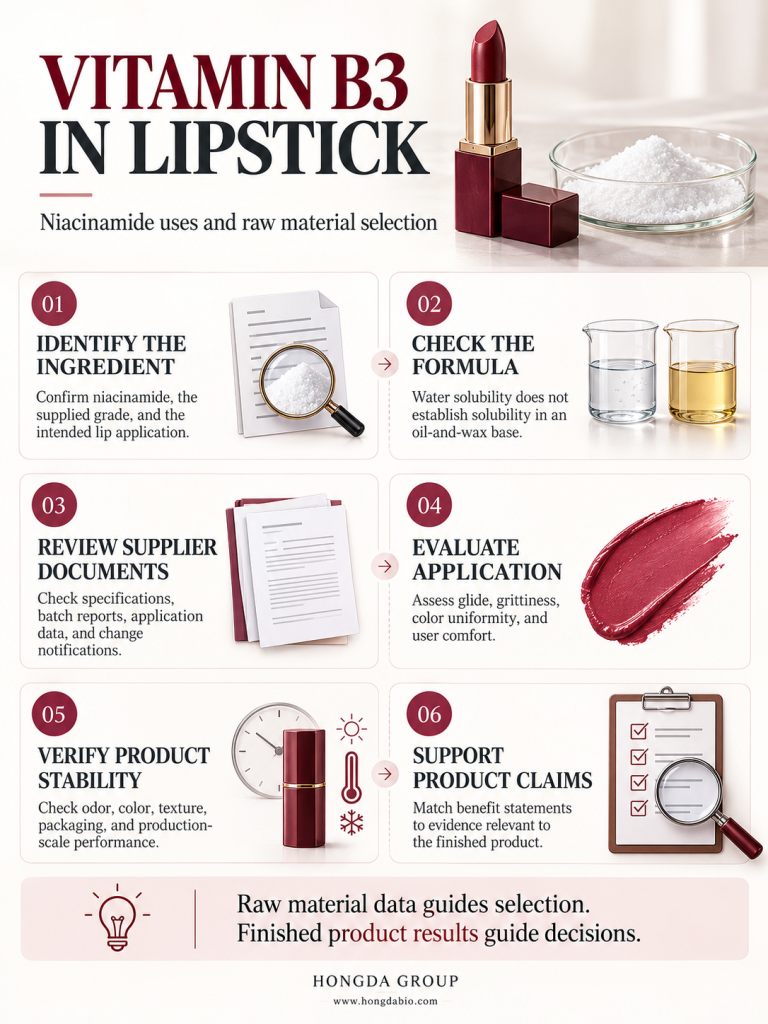
Many solid lipsticks consist primarily of oils and waxes. Niacinamide is water-soluble, but being water-soluble does not mean it will also dissolve uniformly in this type of lipstick system.
If the incorporation method is unsuitable, potential issues include grittiness, uneven application, or changes in texture during storage. These should be investigated during prototype development rather than assessed solely from the product’s appearance immediately after manufacture.
Hongda’s cosmetic-grade niacinamide product page describes the material’s basic physical form and water solubility. For lipstick development, explain the specific intended use to the supplier and request relevant documentation. Formulators can then determine an incorporation method and arrange trials.
The same raw material may perform differently in different formulations. Lip balms, solid lipsticks, and liquid lip products should not automatically follow the same application approach.
Match the Documentation to the Intended Use Before Purchasing
A supplier’s “cosmetic grade” description can help establish the direction of an inquiry, but it does not confirm suitability for every cosmetic application.
Lipstick is applied directly to the lips, and small amounts may enter the mouth during normal use. Evaluation should account for this use pattern rather than relying solely on information for facial cream applications. Likewise, an ingredient’s classification as a vitamin does not justify describing a lipstick containing it as edible.
During procurement discussions, the following points can be confirmed first:
| What to Confirm | How It Supports Procurement and Development |
|---|---|
| Whether information relevant to lip applications is available | Helps determine the extent to which existing documentation supports the intended use |
| Whether the specification and supplied-batch test report are complete | Allows agreed requirements to be checked against the material actually delivered |
| Whether samples and subsequent supplies follow the same specification | Reduces the risk of overlooking further verification after a sample has passed evaluation |
| How changes to the material or manufacturing conditions will be communicated | Helps determine whether new formulation trials are necessary |
Feed-grade documentation cannot replace the information needed for lipstick applications. Even when ingredient names are identical, the intended use and supporting documents for the supplied products should be checked separately.
Evaluate Performance During Use at the Prototype Stage
Prototype evaluation should consider both application performance and the product’s condition after storage.
During application, assess whether the product glides smoothly, has noticeable grittiness, delivers an even color, and causes discomfort among different users. After storage, check for changes in odor, color, and texture, and evaluate the product with the intended packaging.
Comparison with a base formula that does not contain the ingredient generally makes it easier to assess the changes caused by its addition. Otherwise, improved smoothness or a more moisturizing feel may result from changes made at the same time to oils, waxes, or other ingredients and cannot be attributed to vitamin B3 alone.
Once a laboratory sample performs satisfactorily, further confirmation is needed under conditions closer to actual production. Processing, filling, packaging, and storage can all affect the finished product ultimately delivered.
Keep Marketing Statements Within the Scope of the Evidence
“Contains vitamin B3” is ingredient information, while “helps reduce the feeling of dryness” describes a use-related effect. These need to be verified separately.
If a brand plans to describe moisturizing properties, comfort, or other aspects of the user experience, it should establish the evaluation approach in advance. The supporting evidence should correspond to the formulation, packaging, and directions for use of the product being sold.
Statements about changing natural lip color, providing lasting reductions in lip lines, or being suitable for everyone cannot be justified simply by adding niacinamide. A supplier’s description of an ingredient’s skincare applications should not be transferred directly into promises about lipstick performance.
The inclusion level should also be determined by formulators based on the actual formulation. Increasing the amount may change the texture and user experience. Adding more should not be treated as evidence of better results.
Explain the Type of Lip Formulation When Making an Inquiry
Rather than asking only about the price of vitamin B3, provide information such as whether the project involves a solid lipstick or a liquid lip product, the intended sales market, whether development is at the prototype or production stage, and the user experience to be evaluated.
This information helps suppliers provide documentation relevant to the intended application and allows both parties to identify matters that still require verification.
For information about raw material documentation, samples, and supply arrangements, contact Hongda Group and clearly state the intended lip application in your inquiry. The final decision to use the material should be based on document review, prototype results, and finished product evaluation.
Frequently Asked Questions
Does a lipstick containing vitamin B3 necessarily lighten lip color?
No. Ingredient information alone does not demonstrate that the finished product can change natural lip color. Such statements require supporting evidence relevant to the actual finished product.
Can niacinamide powder be added to a lipstick that has already been purchased?
Adding it yourself is not recommended. The amount and distribution cannot be reliably controlled, and doing so changes the original formulation. The evaluation conclusions for the original finished product do not automatically apply to the modified lipstick.
Are new formulation trials needed after changing suppliers?
The documentation should be reviewed again, and any necessary trials should be arranged based on differences between the materials. An identical ingredient name does not mean that two suppliers provide exactly the same specifications or performance in use.