



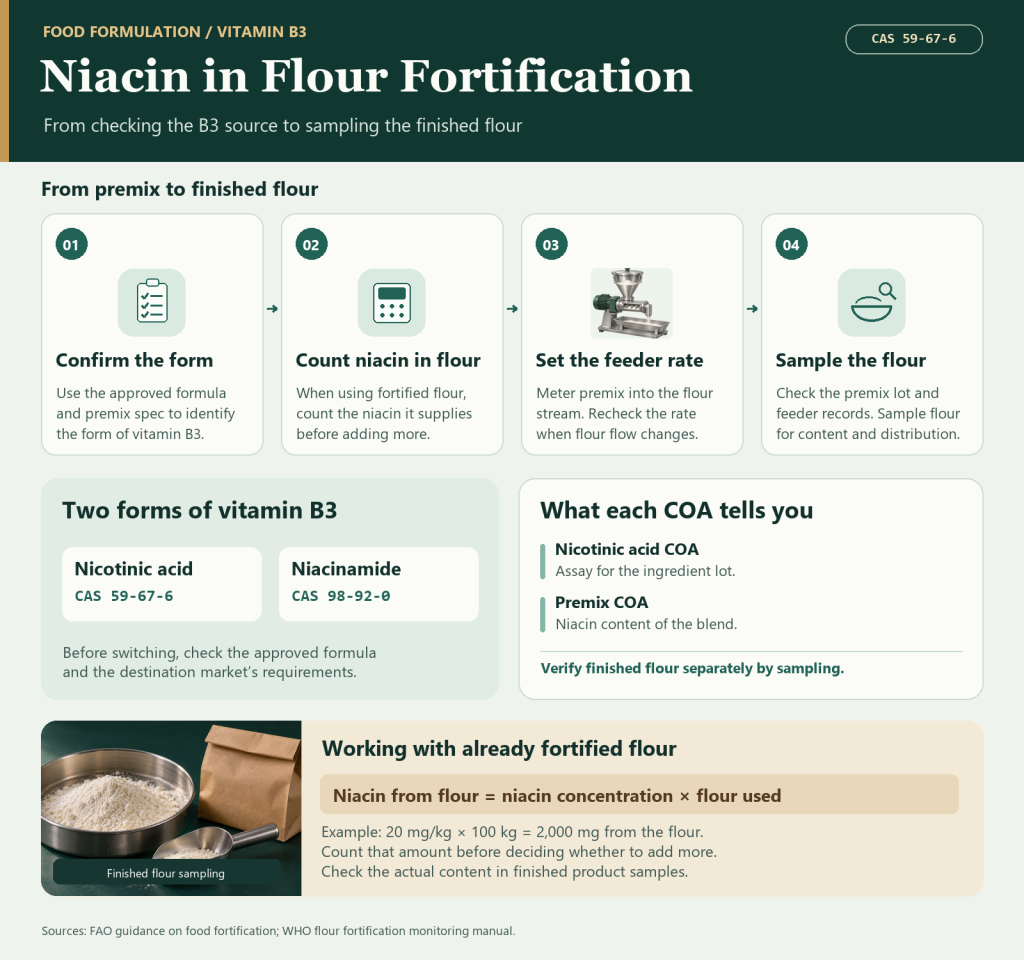
A flour specification may call for “niacin” without naming the form. Before ordering a premix, check whether the formula specifies nicotinic acid or also allows nicotinamide, known as niacinamide. Both supply vitamin B3, but they are different ingredients. The premix specification should name the one actually supplied.
Nicotinic acid product information
| Item | Information |
|---|---|
| Ingredient name | Nicotinic acid |
| Product name | Niacin (Food/USP Grade) |
| CAS number | 59-67-6 |
| Molecular formula | C₆H₅NO₂ |
| Application discussed here | Vitamin B3 fortification in flour and cereal products |
| Related ingredient | Nicotinamide (niacinamide), CAS 98-92-0 |
Requirements vary by product and market. For example, UK guidance on bread and flour composition lists both nicotinic acid and nicotinamide as sources of added niacin for non-wholemeal common wheat flour. If your approved formula specifies one form, check the requirements for the food and its destination market before changing the purchase specification.
How niacin is added to flour and cereals
Flour mills typically add vitamins and minerals through a premix. A feeder meters the premix into a moving stream of flour. The amount added per unit of flour depends on both the feeder rate and the flour flow, so check the feeder rate again when throughput changes. FAO’s guidance on food fortification explains how the physical properties of dry ingredients affect mixing and whether the blend separates during storage.
If a cereal recipe already uses fortified flour, ask the flour supplier for the declared niacin content before ordering a separate premix. Use that value and the amount of flour in the recipe to estimate what the flour contributes to the finished cereal. Then decide whether the formula needs more.
What to check before approving a premix
| Formulation situation | What to check first | What to do next |
|---|---|---|
| The formula says “niacin” without naming the form | The approved formula and the supplier’s ingredient declaration | Confirm whether the premix contains nicotinic acid or nicotinamide before ordering. |
| The cereal already uses fortified flour | The flour specification and its declared niacin content | Account for the niacin supplied by the flour before deciding whether to add more. |
| A supplier proposes a replacement premix | The form of niacin, its declared content and how the result is expressed | Compare the specifications on the same basis, then confirm the intended addition rate. |
| The mill is running its first production trial | The premix lot number, feeder setting and actual flour throughput | Check premix delivery at the operating rate and sample the finished flour according to the quality plan. |
When reviewing a certificate of analysis (COA), start by checking what material it covers. The assay for nicotinic acid powder describes the single ingredient. A niacin result on a premix COA describes the whole blend, which may contain a carrier and other nutrients. At receipt, match the report to the lot number on the package.
The premix COA helps verify the incoming material. Feeder records show what was added, and finished flour samples help verify niacin content and consistency. The WHO flour fortification monitoring manual covers both incoming premix checks and production monitoring.
If your formula specifies nicotinic acid, see Hongda’s food-grade niacin (CAS 59-67-6) for product specifications and packaging. When requesting a batch COA, include the intended food application and destination market so the documentation can be checked against your requirements.
Frequently asked questions
1. Is niacin the same as nicotinic acid?
On a product specification, niacin can refer to nicotinic acid. In nutrition and fortification documents, it can also refer more broadly to vitamin B3. If the document says only “niacin,” check the ingredient name and CAS number before approving the material.
2. Can niacinamide replace nicotinic acid in a flour premix?
Some flour standards allow either form. Before making a substitution, check the approved formula and the requirements of the destination market. Confirm that the replacement premix delivers the intended niacin level at its specified addition rate.
3. Do cereals made with fortified flour need more niacin?
That depends on how much niacin the flour contributes and what the finished cereal is meant to contain. Start with the flour supplier’s specification and the amount of flour in the recipe. Use that information to decide whether a separate addition is needed.
4. Does the premix COA verify the niacin level in finished flour?
No. The COA reports results for the premix batch. It cannot show how much premix the feeder delivered or how evenly it was distributed. Check production records for the amount added and use finished flour samples to verify the result.