



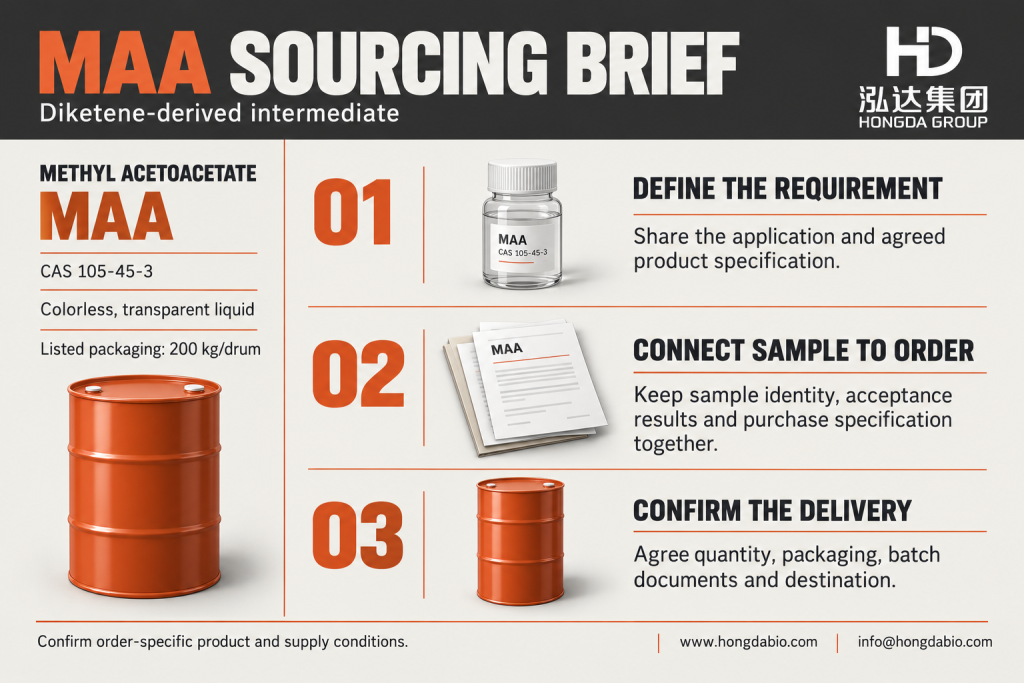
Methyl acetoacetate (MAA, CAS 105-45-3) is a diketene-derived intermediate used in further chemical manufacturing. Hongda Group lists MAA in its published product portfolio.
This page focuses on MAA sourcing. It brings together the available product information and the details buyers need to discuss a sample or commercial order.
Product in focus
| Item | Published product information |
|---|---|
| Product | Methyl Acetoacetate |
| Abbreviation | MAA |
| CAS number | 105-45-3 |
| Appearance | Colorless, transparent liquid |
| Packaging listed | 200 kg per drum |
The listed packaging provides an initial reference. Confirm the specification, packaging and delivery arrangements applicable to the proposed order during the inquiry.
See Hongda Group’s methyl acetoacetate product page for the published product description.
Where MAA fits into manufacturing
MAA is used as an intermediate in pharmaceutical, crop-protection, dye, pigment and other fine-chemical manufacturing. It undergoes further processing before the finished product is obtained.
It also has solvent applications involving cellulose-based materials. Requirements for a solvent application may differ from those for a process in which MAA is converted into another chemical.
An industry description such as “pharmaceutical use” therefore does not define a complete purchasing requirement. Buyers should specify the product requirements and acceptance criteria established for their process.
The upstream production connection
Diketene (CAS 674-82-8) is an upstream raw material used in the manufacture of MAA. Hongda Group’s published manufacturing information describes continuous diketene production connected with downstream processing, including methyl acetoacetate.
That connection provides context for discussing feedstock coordination and production planning. For a particular order, buyers should establish the manufacturing entity, production site and supply schedule relevant to MAA.
Adding or replacing a supply source
When adding a second source of MAA, send the specification currently used for incoming inspection. Identify any requirements that are essential to the process and agree on how the proposed sample will be assessed.
Where an approved reference material is available, compare the proposed sample under the same conditions. Record the results that support acceptance, including any differences that require further investigation.
Keep the accepted sample reference with the test results and purchase specification. This gives production, quality and purchasing staff a shared record of the material approved.
Preparing for a new production requirement
For a new project, provide the product identity, intended manufacturing use and any quality requirements already established.
Separate the quantity needed for evaluation from the first commercial order and the expected repeat demand. These figures support different decisions: sample preparation, the initial delivery and longer-term production discussions.
If a requirement is still being developed, identify it as an open point. The supplier can then distinguish confirmed purchasing conditions from matters that need further discussion.
What should be clear in the supply proposal?
A proposal should allow production, quality and purchasing staff to work from the same information.
| Subject | Information to agree |
|---|---|
| Material | MAA product identity and specification |
| Responsibility | Contracting entity and manufacturer relevant to the order |
| Approval | Sample reference and acceptance requirements |
| Documents | Batch test report and other documents required for receipt |
| Delivery | Quantity, packaging, destination and proposed timing |
| Repeat orders | Forecast assumptions and notification of relevant changes |
A group-level manufacturing description helps explain the business. Product-specific information is needed to assess an individual order.
The quotation should also identify which requirements are included. If the buyer needs additional testing or documents, settle those points before placing the order.
Packaging and receiving arrangements
Confirm that the proposed packaging suits the receiving site’s unloading, storage and material-transfer arrangements.
Request the current safety instructions for the supplied product before delivery. The site’s responsible personnel should review them alongside the proposed shipment and handling arrangements.
Documents accompanying a delivery should identify the material consistently with the order and container labels. Resolve discrepancies before releasing the material into production.
For repeat purchases, agree on how changes affecting the approved material or its delivery will be communicated.
Submit an MAA supply inquiry
For an initial discussion, provide:
- Product: Methyl Acetoacetate / MAA, CAS 105-45-3.
- The required specification or approved reference.
- Sample quantity, first-order quantity and expected repeat demand.
- Delivery destination and preferred timing.
- Required product and batch documents.
You can contact Hongda Group to discuss product information, sample arrangements and the supply conditions available for your request.
Business inquiries: info@hongdabio.com