



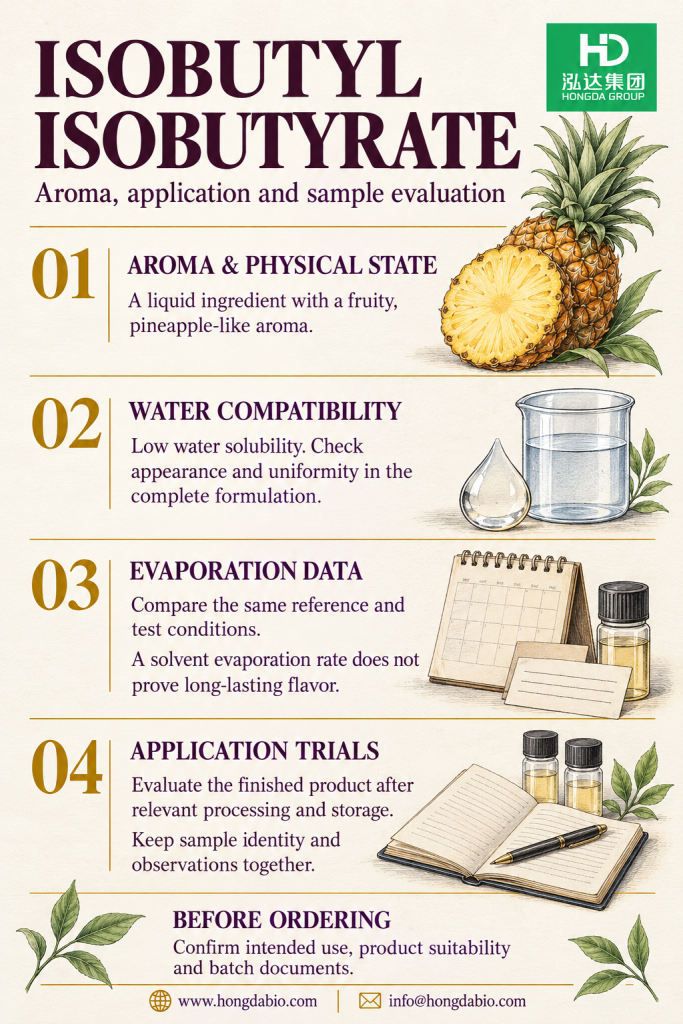
Isobutyl isobutyrate is a liquid ingredient with a fruity aroma commonly associated with pineapple. It is used in flavor development and also has industrial solvent applications.
The same chemical name can therefore appear in two quite different settings: a flavor ingredient catalog and a coatings solvent guide. Those applications call for different product requirements and evaluation methods.
Hongda Group’s isobutyl isobutyrate product page introduces its fruit-flavor applications. For buyers evaluating the ingredient, the main questions are how it performs in the intended product and whether the supplied material meets the requirements of that use.
What is isobutyl isobutyrate?
Isobutyl isobutyrate is an ester, a type of chemical found among many flavor and fragrance ingredients. Its CAS number is 97-85-8.
At ordinary room temperature, it is a liquid rather than a powder or crystal. Reference descriptions identify a pineapple-like odor, while individual flavor descriptions may include other fruity impressions.
An aroma description helps with initial selection. It does not establish how a sample will behave in a complete flavor blend, after processing, or during storage.
The full product name also matters. Isobutyl isobutyrate, isobutyl butyrate, and ethyl isobutyrate are different ingredients. Similar names should not be treated as permission to substitute one for another.
How is it used in fruit flavors?
Isobutyl isobutyrate can contribute a fruity note to a blended flavor. It does not reproduce an entire pineapple, grape, or apple profile on its own; the finished character depends on the other ingredients and the product base.
A useful trial looks beyond the first impression of the flavor concentrate. The development team needs to assess whether the fruity note remains balanced in the finished product and whether processing changes the intended result.
Different applications raise different questions:
| Application being evaluated | Questions for the trial |
|---|---|
| Beverages | Does the flavor remain balanced, and does the product retain its required appearance? |
| Confectionery and baked products | Is the intended fruit character still present after the relevant production process? |
| Chewing gum | How does the flavor change during use, and does it match the development target? |
These are evaluation questions, not performance claims. A pleasant initial aroma does not prove heat resistance or long-lasting flavor.
Why water compatibility matters
Isobutyl isobutyrate has low water solubility. A clear liquid ingredient should therefore not be assumed to dissolve freely in a water-based product.
This distinction is particularly relevant to beverage development. The method used to incorporate the flavor can affect whether the finished product remains uniform or develops an unwanted change in appearance.
The trial should assess the complete formulation under its intended production and storage conditions. Looking only at the neat ingredient, or at a freshly mixed sample, can miss a problem that appears later.
What does evaporation rate tell you?
Evaporation rate describes how quickly a liquid evaporates under specified conditions. Supplier data often express it relative to a reference solvent.
Before comparing two figures, check the reference and the test conditions. Numbers based on different references cannot be compared directly. Temperature, airflow, and the exposed surface also affect evaporation in practice.
In coatings, isobutyl isobutyrate is used as a relatively slow-evaporating solvent to help manage drying and surface appearance. That industrial role does not establish how long its fruity character will remain noticeable in food.
Flavor persistence depends on the complete product. Processing, packaging, storage, and the way the flavor is released during consumption all need consideration. A solvent evaporation figure cannot replace an application trial.
How to compare samples without losing useful information
For a supplier comparison, use the same formulation and preparation method for each sample. Keep the evaluation timing consistent.
Where an approved reference exists, compare against it. Record the sample identity, the initial flavor result, and the observations after the processing or storage conditions relevant to the product.
Keep aroma and appearance observations separate. A sample may give the intended fruity note while failing an appearance requirement, or maintain a clear appearance while changing the flavor balance.
The record should explain why the sample was accepted. This gives purchasing and quality staff something more useful than a general note that it “smells fruity.”
What should buyers confirm before ordering?
State the intended use at the start of the inquiry. A product offered for industrial solvent use should not be assumed suitable for food flavoring.
For a food-related application, confirm the supplied product’s suitability and supporting documents for the intended market. An ingredient’s presence in a flavor reference database does not certify every commercial batch.
Agree on the product specification and the batch documents required for receipt. Obtain the current safety instructions for the supplied material so the receiving site can review its storage and handling arrangements.
For a quotation, provide the expected quantity, packaging needs, and delivery destination. You can contact Hongda Group to confirm product information, sample arrangements, and the supply conditions available for your application.