



Crotonaldehyde is an industrial raw material used to manufacture other chemicals. Established applications include sorbic acid production, crotonic acid production, and the manufacture of materials used further along the vitamin E production chain. It also has applications in certain resin and agricultural chemical processes.
These uses describe where crotonaldehyde fits into manufacturing. Selecting a commercial product requires a separate assessment of the supplied material against the buyer’s process and quality requirements.
For initial product information, see Hongda Group’s crotonaldehyde product page.
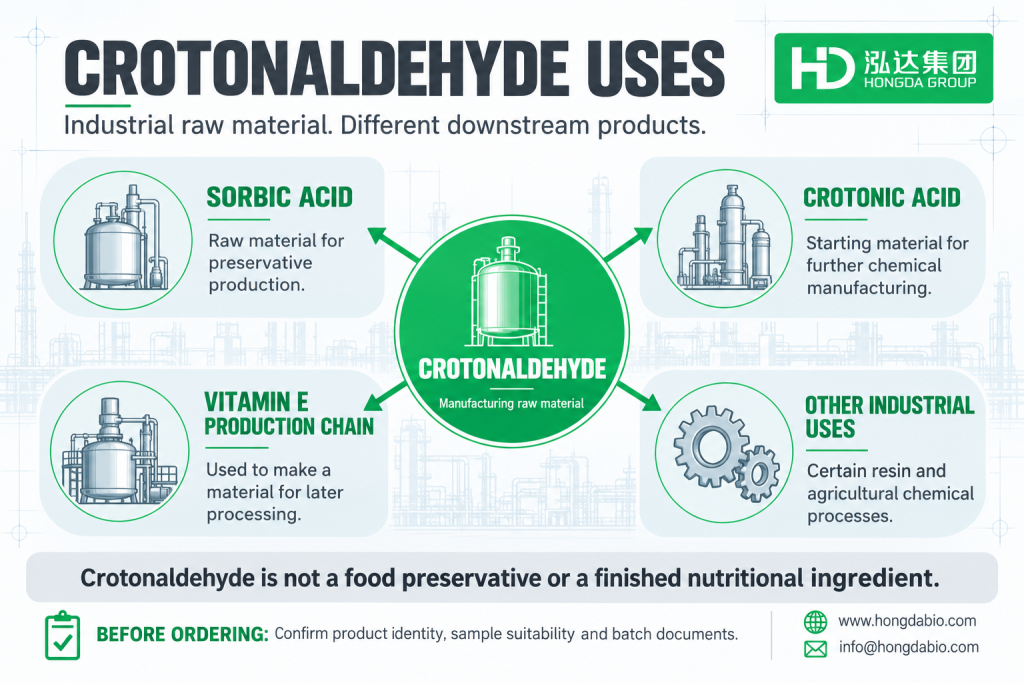
What is crotonaldehyde used for?
Sorbic acid production
Sorbic acid production is a well-established application for crotonaldehyde. Manufacturers process crotonaldehyde with other materials and carry out further treatment to obtain the finished preservative.
Crotonaldehyde and sorbic acid therefore occupy different positions in the supply chain. Crotonaldehyde is a manufacturing input; sorbic acid is the resulting product used for preservation.
For a sorbic acid producer evaluating a new source, the useful question is whether the offered material works within the established production process. This includes whether the finished product meets its acceptance requirements and whether additional processing is needed.
A supplier’s application list can support initial screening. Approval should follow the buyer’s own evaluation of the material.
Crotonic acid production
Crotonaldehyde can also be converted into crotonic acid, which is used in further chemical manufacturing.
The similar names can cause confusion during purchasing, particularly when an inquiry passes between production staff, procurement teams, and distributors. Crotonaldehyde and crotonic acid are different products and cannot be ordered or used interchangeably.
An inquiry should identify the required material clearly. The quotation, product documents, and container labels should then refer consistently to that material.
Materials used in vitamin E production
Crotonaldehyde is used to manufacture a material that undergoes further processing in vitamin E production.
This is an indirect role in the production chain. Crotonaldehyde itself is not vitamin E, a dietary supplement, or a finished nutritional ingredient.
The distinction is relevant when reading broad application descriptions such as “used in nutrition.” Such wording may refer to the manufacture of another substance several processing stages before the finished ingredient is obtained. Buyers should confirm the exact manufacturing use rather than infer suitability from an industry category.
Certain resin and agricultural chemical applications
Crotonaldehyde also has uses in some resin manufacturing processes and in the production of certain agricultural chemicals.
These applications depend on the product being made and the production route used. A general statement that crotonaldehyde is used in resins or agriculture does not establish that it can be added directly to any finished formulation.
For these inquiries, provide the intended manufacturing use and the raw material requirements already established by the production team. This gives the supplier a clearer basis for identifying a potentially suitable product.
Is crotonaldehyde a food preservative?
Crotonaldehyde is a raw material used to manufacture sorbic acid, a food preservative. It should not be treated as a substitute for sorbic acid or as an ingredient for direct addition to food.
Suitability for manufacturing a food-related product must also be assessed separately from the suitability of the finished product for food use. The raw material, manufacturing process, and finished product each have their own requirements.
What should buyers compare before ordering?
Start with the identity of the supplied product. Product names and identification details should agree across the quotation, specification, and safety documentation. Ask the supplier to explain any differences before proceeding.
Next, confirm whether the material contains an added ingredient used to maintain stability during storage and transport. If present, its relevance to the intended process needs to be assessed. Two products with similar headline purity figures may still differ in ways that matter to production.
Agree on the acceptance requirements before requesting a sample. Where an existing material is already in use, compare the proposed replacement under the same conditions. Record the sample reference, processing observations, and finished product results.
A useful evaluation record explains why the material was accepted. It also allows purchasing to connect the approved sample with the specification used for commercial orders.
Keep commercial deliveries consistent with the approval
Once the material has been approved, include the agreed requirements in the purchase documentation. Confirm which batch documents will accompany delivery and how they will correspond to the container labels.
Packaging and delivery arrangements should suit the receiving site. Crotonaldehyde is flammable and toxic, so the current safety documentation should be reviewed by the responsible personnel before receipt and use. A general application guide cannot establish the handling arrangements for an individual site.
For repeat purchases, agree on how changes to the supplied product or packaging will be communicated. The buyer can then decide whether further review or testing is required.
Discuss your crotonaldehyde requirements with Hongda Group
When making an inquiry, provide the intended manufacturing application, expected quantity, delivery destination, and any existing raw material requirements.
If material selection is still underway, explain what the evaluation needs to establish. You can contact Hongda Group to confirm available product information, supporting documents, packaging options, and delivery arrangements for your request.