



Isobutyric acid is used in flavor formulations and in the manufacture of other ingredients. It has a strong, pungent odor, yet it can contribute to butter and cheese-style flavor profiles when used appropriately in a blend.
That difference between the concentrated ingredient and the finished flavor is central to selecting it. An odor description helps identify its character; a formulation trial shows whether that character belongs in the product being developed.
Hongda Group’s isobutyric acid product page introduces its flavor applications and product information.
What does isobutyric acid smell like?
Isobutyric acid, also called 2-methylpropanoic acid, has a sharp odor. Flavor descriptions associated with it include butter and cheese, along with less pleasant notes that may be described as rancid or sweaty.
These descriptions are useful reference points, rather than predictions of the finished flavor. The amount used, the other ingredients, and the product base all influence what is perceived.
For example, a cheese-like note may support one formulation while making a mild dairy flavor seem too strong. The development task is to find whether the ingredient contributes the intended character without introducing an unwanted note.
Concentrated isobutyric acid is corrosive. Assessment should follow professional handling procedures and the product’s safety instructions; direct smelling from an open container is not an appropriate evaluation method.
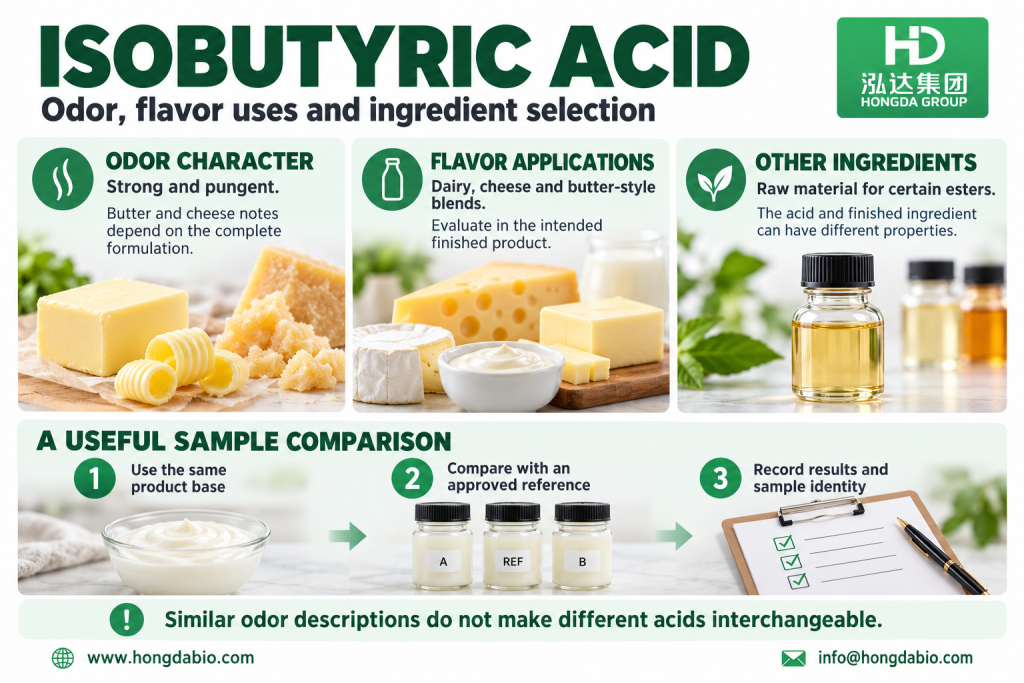
How is it used in flavors?
Dairy and cheese-style profiles
Isobutyric acid can contribute to the buttery or cheese-like character of a flavor blend. It works alongside other ingredients, each contributing part of the overall impression.
The finished blend needs to be assessed in its intended product. A flavor that performs well in one base may become too prominent or poorly balanced in another. Evaluating only the flavor concentrate can miss that difference.
The ingredient’s presence also says nothing by itself about natural origin or fermentation. Those descriptions depend on the source and manufacture of the ingredients and the labeling requirements that apply.
Butter and baked-food flavor development
In butter or baked-food flavor development, the relevant question is whether isobutyric acid adds a useful dairy note to the complete formulation.
A practical trial compares the proposed blend with a reference and, where useful, a version without the ingredient. This helps distinguish a useful contribution from a change that simply makes the flavor stronger.
An application description does not provide a universal addition rate. Food-use suitability and the requirements of the intended market must be confirmed before development proceeds with a particular supplied product.
Its role in making other ingredients
Isobutyric acid is also used to manufacture certain esters—different chemicals made by processing the acid with other materials. Some have applications in flavors, fragrances, or solvents.
Their properties should be considered separately from those of the starting acid. An ingredient made from isobutyric acid may have a different odor and a different function in a formulation.
When requesting a quotation, identify the actual material required. A request for a fruity fragrance ingredient is not necessarily a request for isobutyric acid.
Can butyric acid or isovaleric acid replace it?
Isobutyric acid, butyric acid, and isovaleric acid are different chemicals. Similar names and overlapping odor descriptions do not make them interchangeable.
If a replacement is being considered, compare the actual ingredients in the intended formulation. Check the complete flavor after the relevant processing and storage conditions, rather than relying on a shared description such as “cheesy.”
Purchasing documents should identify the approved material clearly so that a formulation decision does not become a naming error when the order is placed.
What makes a sample evaluation useful?
Agree on what the sample must demonstrate before testing begins.
For a change of supplier, use the same product base, preparation conditions, and evaluation timing as the approved reference. Record whether the intended flavor is maintained and whether an unwanted note appears. Where practical, coded samples can help reduce expectations based on supplier identity.
Keep the sample reference with the evaluation record and the agreed product specification. A clear record should allow another team member to understand what was tested and why it was accepted.
Before ordering commercial quantities, confirm food-use suitability where relevant, the documents supplied with each batch, and the connection between the evaluated sample and future deliveries. A general chemical specification alone does not settle every flavor application requirement.
Requesting product information and a quotation
Provide the intended application, expected quantity, delivery destination, and any established acceptance requirements when making an inquiry.
Compare quotations on the same basis, including packaging and supporting documents. For repeat purchases, agree on how changes to the supplied material will be communicated.
Contact Hongda Group to confirm product information, sample arrangements, and the supply conditions available for your request.